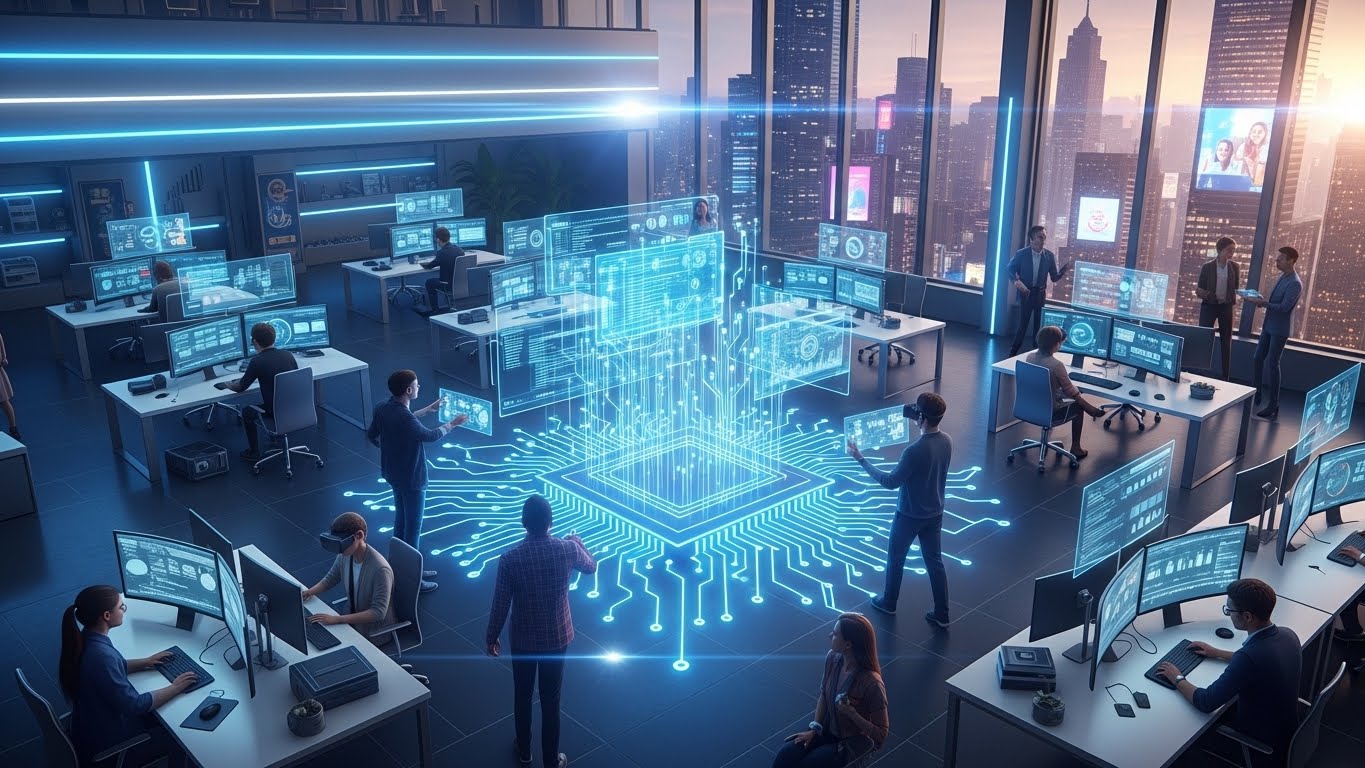

Technology is no longer just a part of our lives—it is our lives. From the moment we wake up to the time we go to bed, every aspect of our day is touched by technological innovation. The world runs on algorithms, data, and connectivity. Yet, technology is more than just devices and software; it is a constantly evolving force that defines how we work, learn, communicate, and imagine the future. The beauty of technology lies in its ability to evolve endlessly, transforming the impossible into the ordinary and making the future a continuous present.
The digital age has created a new era where change happens not over centuries, but over months. The smartphone you bought two years ago is already considered outdated. The skills taught in schools today might be replaced by artificial intelligence tools tomorrow. This is the pace of technological advancement in the 21st century. To understand the depth and scope of this transformation, one must explore not only what technology does, but how it shapes human experience, society, and imagination.
The Foundation of Modern Technology
The roots of modern technology stretch far beyond the digital revolution. From the first spark of fire to the creation of the wheel, early humans sought to use tools to make life easier. Every great civilization—whether ancient Egypt, Greece, China, or Mesopotamia—was built on its technological advancements. Agriculture, architecture, metalworking, and writing were all forms of early technology.
As centuries passed, human ingenuity accelerated. The Industrial Revolution in the 18th century marked a massive leap in productivity. Machines replaced manual labor, electricity replaced steam, and factories replaced workshops. This era gave birth to urbanization, global trade, and the foundations of modern industry. However, the real shift—the one that truly transformed the world—arrived with the invention of computers and digital systems.
The Birth of the Digital Age
The 20th century was the cradle of the digital revolution. Early computers were enormous machines occupying entire rooms, capable of performing only limited calculations. Yet, within a few decades, they evolved into personal computers accessible to homes and businesses. The development of microprocessors in the 1970s condensed computational power into tiny chips, opening the door to the era of digital accessibility.
By the 1990s, the internet connected the world in a way no one had ever imagined. Communication, once bound by geography, became instant. Emails replaced letters, search engines replaced libraries, and online marketplaces began to rival physical stores. The internet became the new frontier of human interaction and information exchange. It marked the beginning of what we now call the Information Age.
The Rise of Mobile and Cloud Computing
The arrival of smartphones was another pivotal moment in technological history. What was once a device for calls and texts became an all-in-one tool for communication, entertainment, navigation, and productivity. The integration of mobile applications turned phones into digital ecosystems, making every service accessible from the palm of your hand.
Cloud computing further revolutionized the digital world. Instead of relying solely on local storage or physical devices, people and businesses could now store and access data remotely through the internet. This innovation allowed for global collaboration, data security, and scalability. Today, entire companies run their operations in the cloud, reducing costs while increasing efficiency.
Cloud technology also powers the modern digital economy—from streaming services and gaming platforms to artificial intelligence and financial systems. It is the invisible infrastructure that makes the modern world seamless and interconnected.
Artificial Intelligence: The New Frontier
Artificial intelligence, or AI, is arguably the most transformative innovation of the 21st century. It represents a shift from computers that simply follow instructions to systems that can learn, adapt, and make decisions. Machine learning algorithms can analyze vast amounts of data, identify patterns, and generate insights faster than any human could.
AI is present in nearly every aspect of modern life. Virtual assistants recognize voices and respond intelligently. Online platforms recommend what movies to watch, what songs to play, or what products to buy. In industries, AI automates tasks, optimizes logistics, and enhances customer experiences. In healthcare, it helps detect diseases and predict outbreaks.
AI’s influence goes beyond efficiency—it is shaping creativity. Tools powered by AI can compose music, design graphics, write stories, and even create entire video games. It blurs the line between human and machine creativity, raising philosophical questions about the nature of art and innovation. As AI becomes more advanced, society must balance its benefits with ethical considerations such as bias, privacy, and job displacement.
The Internet of Things and the Smart World
The Internet of Things (IoT) is the next logical step in technological evolution. It connects physical devices—appliances, vehicles, wearables, and infrastructure—to the internet, enabling them to communicate and operate intelligently. In essence, IoT transforms objects into data-driven tools that adapt to human needs.
Smart homes, for instance, use IoT technology to automate lighting, heating, and security systems. Smart cities employ sensors to manage traffic, energy use, and waste management. In industries, IoT enables predictive maintenance, ensuring machines operate efficiently without downtime. In agriculture, sensors monitor soil quality, temperature, and crop health to optimize yields.
The true power of IoT lies in data. Each connected device collects and shares information, creating a network of insights that drive decision-making and innovation. However, this interconnectivity also introduces new challenges related to cybersecurity and data privacy, which must be addressed as the technology expands.
Robotics and Automation in Industry
The manufacturing sector has undergone a revolution due to robotics and automation. Robots have moved beyond simple assembly-line tasks to complex operations requiring precision and adaptability. They work alongside humans in factories, warehouses, and even hospitals, performing tasks that are repetitive, dangerous, or require extreme accuracy.
Automation has increased productivity and lowered production costs, but it has also transformed the workforce. Traditional manual labor roles are declining, while new opportunities are emerging in robotics engineering, programming, and maintenance. The concept of “collaborative robots” or “cobots” represents the next phase—machines that work safely and intuitively with humans.
In the long run, robotics and automation are not just about efficiency but about redefining human potential. By automating routine tasks, people are free to focus on creativity, problem-solving, and innovation—the very traits that machines cannot replicate.
The Power of Data and Analytics
In today’s digital ecosystem, data is often called the new oil. Every click, transaction, and movement generates data that can be analyzed to reveal patterns and insights. Businesses use this information to make informed decisions, predict trends, and personalize customer experiences. Governments analyze data to improve infrastructure and services.
Big Data analytics has become essential for industries like healthcare, finance, and education. In sports, data analysis helps coaches design strategies and monitor athlete performance. In entertainment, it helps platforms understand viewer preferences and recommend content.
The challenge, however, lies in managing and protecting this data. With growing concerns about privacy and surveillance, the world must find a balance between innovation and individual rights. Ethical data use will be one of the defining issues of the digital era.
Virtual and Augmented Reality
Virtual Reality (VR) and Augmented Reality (AR) have moved from niche concepts to mainstream technologies. VR immerses users in entirely digital environments, while AR overlays digital information on the real world. Together, they are transforming industries such as gaming, education, healthcare, and retail.
In gaming, VR offers immersive experiences where players can explore worlds as if they were truly inside them. In education, students can interact with 3D models of historical sites or scientific concepts. In healthcare, surgeons can practice procedures using virtual simulations.
AR has practical applications in navigation, design, and commerce. Retailers use AR to let customers visualize how furniture would look in their homes or how clothes would fit before purchasing. As hardware becomes more affordable and software more advanced, VR and AR will become integral parts of everyday life.
The Role of Blockchain and Digital Security
Blockchain technology has redefined the concept of trust in the digital world. It enables decentralized systems where data is transparent, immutable, and secure. Originally created for cryptocurrencies, blockchain now powers applications in finance, supply chain management, and digital identity.
Its decentralized nature means that no single entity controls the data, reducing the risk of fraud or manipulation. In finance, blockchain facilitates secure transactions without intermediaries. In logistics, it provides traceability for goods from production to delivery. In governance, it promises transparent voting systems.
As digital systems become more interconnected, cybersecurity becomes a top priority. With cyberattacks on the rise, securing data and protecting privacy are crucial challenges. Encryption, biometrics, and advanced authentication methods are evolving to safeguard users and organizations.
The Role of Technology in Sustainability
As the world faces the urgent challenge of climate change, technology is at the forefront of finding sustainable solutions. Innovations in renewable energy, electric vehicles, and green infrastructure are reshaping industries toward eco-friendly models.
Solar panels, wind turbines, and energy storage systems are becoming more efficient and affordable. Smart grids use real-time data to distribute energy effectively. Electric vehicles are reducing carbon emissions and dependence on fossil fuels. Meanwhile, advancements in recycling technology are helping manage waste sustainably.
Technology is also transforming agriculture through precision farming, where drones and sensors optimize resource use. Sustainable architecture, powered by AI and IoT, creates buildings that adapt to environmental conditions and conserve energy.
The fusion of technology and sustainability is not just an environmental necessity—it is an opportunity for economic growth and innovation.
Technology in Communication and Social Connection
Communication technology has changed the way humans interact. Social media platforms, instant messaging, and video conferencing have made the world more connected than ever. A person can communicate across continents in real time, collaborate remotely, or build entire businesses online.
However, this digital interconnectedness also has a darker side. The constant stream of information can lead to overload, misinformation, and mental fatigue. Social media, while fostering connection, can also create isolation and anxiety. Balancing digital engagement with real-world connection has become an essential part of modern well-being.
The Future of Transportation
Technology is driving the next revolution in transportation. Electric vehicles are becoming mainstream, while autonomous cars promise safer and more efficient travel. High-speed trains, drone deliveries, and even concepts like the Hyperloop are reshaping how people and goods move across the globe.
Smart traffic systems, powered by AI and IoT, are reducing congestion in cities. In aviation, electric and hybrid planes are being developed to reduce carbon emissions. Space travel, once a fantasy, is now a private industry, opening the door to commercial space tourism and interplanetary exploration.
The transportation systems of the future will be cleaner, faster, and more connected. The goal is not just to move people but to transform mobility into an integrated, sustainable ecosystem.
Conclusion: The Boundless Future of Technology
Technology is not just a collection of tools—it is the story of human progress. It reflects our deepest desires to explore, create, and connect. From the first invention of fire to the rise of artificial intelligence, technology has always been a mirror of our ambition.
As we stand on the edge of another technological revolution, the challenge is to ensure that innovation serves humanity. Ethical design, sustainability, and inclusivity must guide the next generation of technologies. The future of technology is not about replacing humans but empowering them—to dream bigger, work smarter, and live better.
The world of technology is infinite, expanding with every discovery. The only constant in this journey is change. And as long as curiosity and creativity drive us forward, technology will continue to shape the destiny of humankind—turning imagination into reality and challenges into opportunities.