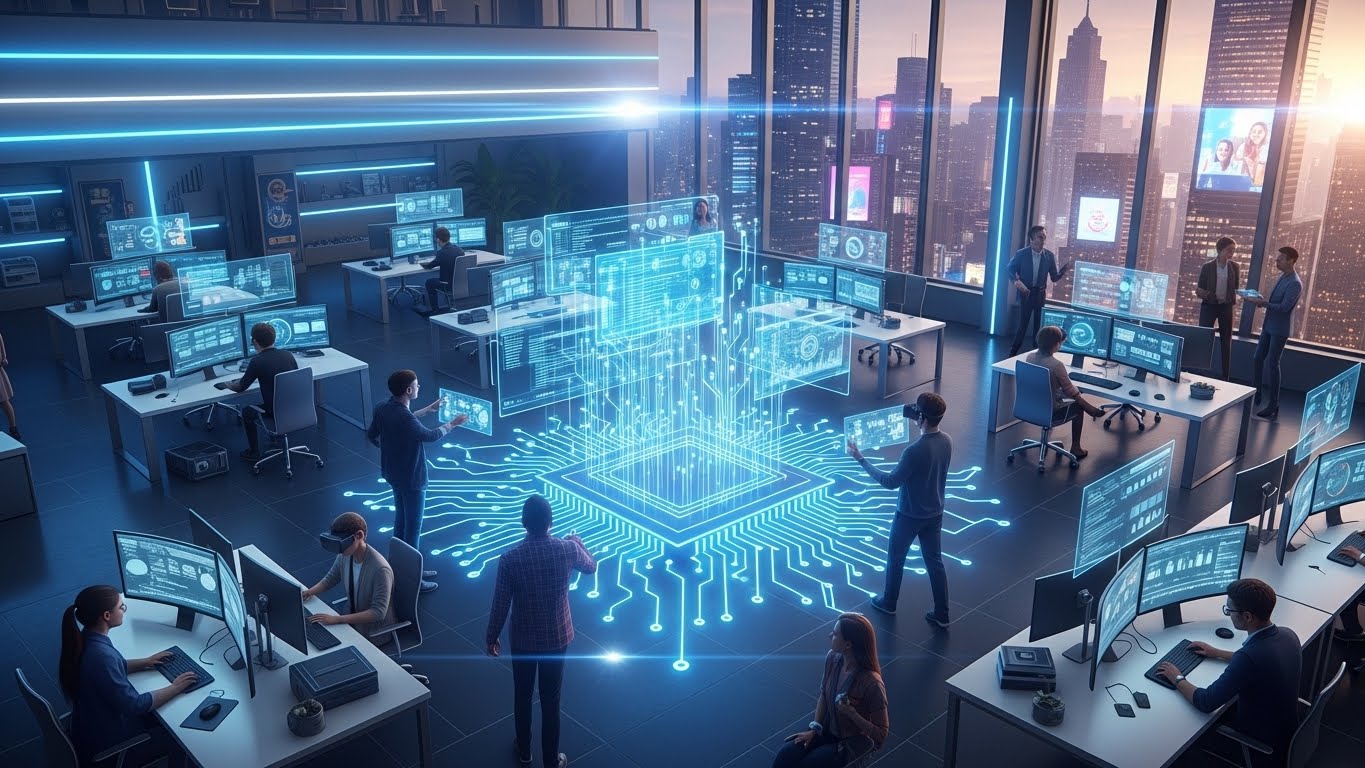


Technology has become the cornerstone of modern life. From communication to healthcare, transportation to entertainment, the influence of technology is ubiquitous. Yet, the pace at which technology evolves can be overwhelming, often challenging our understanding of what is possible. This blog explores the latest technological innovations, their impact on society, and the possibilities that lie ahead.
The Rise of Artificial Intelligence
Artificial Intelligence, commonly referred to as AI, is no longer a concept confined to science fiction. AI is deeply integrated into our daily lives, from voice assistants and recommendation systems to autonomous vehicles and healthcare diagnostics. One of the key strengths of AI is its ability to process massive amounts of data and identify patterns beyond human capacity.
Machine learning, a subset of AI, allows systems to learn and improve from experience without explicit programming. This capability is transforming industries, enabling faster decision-making and optimized processes. For instance, in the financial sector, AI algorithms predict stock market trends, detect fraudulent activity, and even personalize investment advice. In healthcare, AI-driven systems analyze medical images with remarkable accuracy, assisting doctors in early diagnosis of diseases such as cancer and heart conditions.
Despite its advantages, AI also raises ethical and social concerns. Issues related to privacy, data security, and job displacement demand careful consideration. Balancing innovation with responsible deployment is essential for AI to continue driving progress without unintended consequences.
Quantum Computing: Redefining Computation
Quantum computing represents a radical departure from classical computing. While traditional computers use bits to process information in the form of 0s and 1s, quantum computers use qubits, which can exist in multiple states simultaneously thanks to the principle of superposition. This allows quantum machines to perform complex calculations at speeds unimaginable for conventional computers.
The potential applications of quantum computing are vast. In cryptography, quantum systems can break codes that were previously considered unbreakable, necessitating a reevaluation of data security. In pharmaceuticals, quantum simulations can accelerate drug discovery by accurately modeling molecular interactions. Even climate modeling could benefit from quantum computing, providing more precise predictions to guide environmental policy.
However, quantum computing is still in its infancy. Challenges such as error correction, qubit stability, and scalable architecture need to be addressed before widespread adoption. Despite these hurdles, leading technology companies and research institutions are investing heavily in quantum research, signaling a transformative era on the horizon.
Internet of Things: Connecting the World
The Internet of Things, or IoT, refers to the network of interconnected devices that communicate and share data with one another. Smart homes, wearable devices, connected vehicles, and industrial sensors are all part of the IoT ecosystem. These devices enhance convenience, efficiency, and safety by providing real-time data and automating processes.
For example, smart thermostats learn user preferences and optimize energy consumption, while wearable fitness trackers monitor vital signs and suggest health improvements. In manufacturing, IoT-enabled machinery predicts maintenance needs, reducing downtime and operational costs. Cities are also adopting IoT solutions to improve urban living, such as smart traffic lights that reduce congestion and sensors that monitor air quality.
However, the proliferation of connected devices introduces significant security and privacy risks. Each device is a potential entry point for cyberattacks, making robust encryption and security protocols crucial. As IoT continues to expand, striking a balance between innovation and safety will be critical to ensuring public trust.
5G Technology: Revolutionizing Connectivity
The rollout of 5G networks is set to revolutionize connectivity, enabling faster data transmission, lower latency, and greater network capacity. Unlike previous generations of mobile networks, 5G can support a massive number of devices simultaneously, making it ideal for IoT, autonomous vehicles, and immersive technologies like augmented reality and virtual reality.
With 5G, remote surgeries become more feasible as surgeons can operate robotic systems with minimal delay. Autonomous cars can communicate in real-time with other vehicles and traffic infrastructure, enhancing road safety. Additionally, 5G will support high-quality streaming and cloud computing applications, transforming the way we work, learn, and entertain ourselves.
Despite these advantages, 5G implementation faces challenges, including infrastructure costs, regulatory hurdles, and concerns about electromagnetic radiation. Yet, the promise of ultra-fast, reliable connectivity makes it a pivotal technology for the coming decade.
Blockchain Beyond Cryptocurrency
While blockchain gained fame as the foundation of cryptocurrencies, its applications extend far beyond digital money. At its core, blockchain is a decentralized ledger that provides transparency, security, and immutability. This makes it ideal for industries such as supply chain management, healthcare, finance, and even voting systems.
In supply chains, blockchain can track products from origin to consumer, ensuring authenticity and reducing fraud. In healthcare, secure blockchain records can store patient information, enabling seamless and accurate data sharing between providers. Financial institutions use blockchain to streamline cross-border payments, reducing transaction times and costs. Even governments are exploring blockchain-based voting to enhance electoral transparency.
Despite its potential, blockchain faces hurdles such as energy consumption, scalability, and regulatory uncertainty. As the technology matures, innovative solutions are emerging, making it a powerful tool for building trust and efficiency in a digital world.
Augmented Reality and Virtual Reality: Bridging the Digital and Physical
Augmented Reality (AR) and Virtual Reality (VR) are redefining the way humans interact with digital content. AR overlays digital information onto the real world, enhancing experiences in gaming, retail, education, and healthcare. VR, on the other hand, immerses users in a fully digital environment, enabling simulations, training, and entertainment experiences that were once unimaginable.
In education, AR can make learning interactive by bringing complex concepts to life, while VR can simulate real-world scenarios for hands-on training without risk. Retailers use AR to allow customers to visualize products in their own homes before purchase, enhancing decision-making. In healthcare, surgeons use VR to practice complex procedures, improving precision and outcomes.
The growth of AR and VR is closely tied to advancements in hardware, such as lightweight headsets, high-resolution displays, and motion tracking. As these technologies become more accessible, they are poised to transform not just entertainment but fundamental aspects of work, learning, and social interaction.
Robotics and Automation: Redefining Work
Robotics and automation are reshaping industries by performing tasks that are repetitive, dangerous, or require high precision. From assembly lines in manufacturing to surgical robots in hospitals, these systems increase efficiency, accuracy, and safety.
Collaborative robots, or cobots, work alongside humans, enhancing productivity without replacing human workers entirely. Autonomous drones are used for delivery, agriculture monitoring, and disaster relief, reducing human risk and speeding up operations. In logistics, automated warehouses streamline inventory management and order fulfillment, saving time and reducing costs.
While automation improves efficiency, it also raises questions about the future of work. Reskilling and adapting the workforce to collaborate with advanced machines is crucial to prevent widespread job displacement and ensure that technology serves humanity rather than replaces it.
Renewable Technology and Sustainable Innovation
As climate change becomes an urgent global concern, technology is playing a critical role in creating sustainable solutions. Renewable energy technologies such as solar panels, wind turbines, and battery storage systems are revolutionizing the way we generate and consume power. Advanced energy management systems optimize energy use, reduce waste, and lower carbon footprints.
Emerging innovations like green hydrogen, smart grids, and energy-efficient building materials promise even greater environmental impact. Additionally, technology-driven initiatives such as precision agriculture and water management systems enhance resource efficiency, supporting sustainable food and water security.
Technology not only drives sustainability but also fosters awareness. Data analytics and IoT devices enable individuals and organizations to monitor their environmental impact, encouraging responsible consumption and conservation practices.
Challenges and Ethical Considerations
Despite the tremendous potential of modern technology, there are significant challenges to consider. Privacy concerns, cybersecurity threats, ethical dilemmas, and the digital divide highlight the need for responsible innovation. Governments, corporations, and individuals must collaborate to ensure technology benefits society equitably and ethically.
Artificial intelligence decisions, autonomous systems, and data-driven policies all require transparency and accountability. Ensuring that marginalized communities have access to technological advancements is critical to preventing inequality from widening in an increasingly digital world.
The Road Ahead
The future of technology is a tapestry of interconnected innovations. AI, quantum computing, IoT, 5G, blockchain, AR/VR, robotics, and renewable technologies collectively promise to reshape industries, societies, and human experiences. The speed of change is unprecedented, and adaptability is essential for individuals, organizations, and governments alike.
While challenges exist, the potential for positive impact is enormous. By fostering ethical, sustainable, and inclusive technological development, humanity can harness innovation to solve some of its most pressing problems, from climate change and healthcare to education and global connectivity.
In conclusion, technology is no longer a mere tool; it is a transformative force that defines the present and shapes the future. The question is not whether we will embrace these changes, but how wisely we choose to integrate them into our lives. Those who understand, adapt, and innovate alongside technology will be the architects of the next era of human progress.