
Introduction: The Silent Tech Revolution
Technology is often celebrated through flashy headlines, major product launches, and futuristic promises. Yet, while we look for dramatic breakthroughs, a quieter revolution is happening all around us. Our daily routines, work environments, social interactions, and even the way we think are being reshaped by technologies that often go unnoticed. This blog explores how emerging technologies—like artificial intelligence, automation, smart devices, and immersive digital spaces—are transforming life in subtle but powerful ways.
The Rise of Invisible AI
Artificial intelligence used to feel like a distant idea from science-fiction stories, but today, it exists everywhere around us. What makes modern AI fascinating is not just its capabilities—it’s how seamlessly it blends into daily life. When your phone predicts what you want to type, when online platforms suggest songs or movies you might enjoy, or when your camera automatically adjusts lighting for better photos, AI is working behind the scenes.
These small moments create a smoother experience without users even noticing. The future of AI is leaning toward this invisible integration. Instead of asking people to adapt to technology, AI is learning to adapt to us. It’s understanding patterns, recognizing preferences, and anticipating needs. This subtle presence is shaping a world where technology feels more intuitive and less intrusive.
The Workplace Reimagined Through Smart Technology
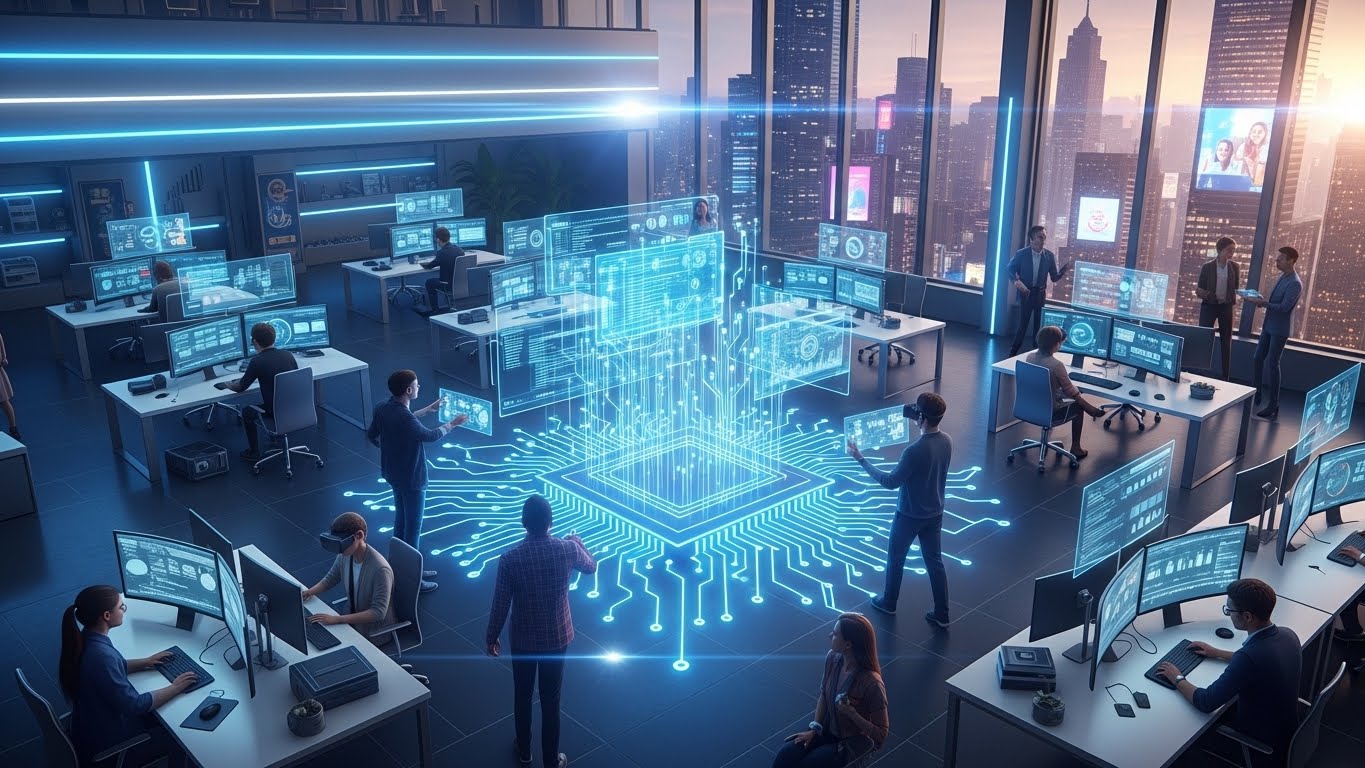
Work life has undergone massive changes, especially with the rise of remote and hybrid setups. Behind these shifts are technologies designed to make work more flexible and efficient. Cloud-based tools allow teams across continents to collaborate in real time, while digital workspaces bring meetings, brainstorming sessions, and project management into one unified environment.
Automation is another quiet force redefining productivity. Repetitive tasks—such as organizing data, sending emails, or scheduling—are increasingly handled by software. This change frees employees to concentrate on more meaningful and creative responsibilities.
Smart workplaces are also becoming mainstream, with sensors that adjust lighting and temperature, intelligent meeting rooms that auto-configure based on preferences, and security systems that use biometrics. These enhancements might seem small, but collectively, they create a modern workplace that feels more fluid, personalized, and human-friendly.
The Evolution of Personal Devices
Personal tech devices have become extensions of ourselves. But beyond the obvious upgrades in speed and design, there’s a deeper transformation happening. Devices are no longer just tools—they are companions that understand habits and provide proactive solutions.
Smartphones now identify routine behaviors and offer reminders before we even ask. Wearable devices monitor health metrics like sleep patterns, stress levels, and fitness progress. Tablets and laptops learn how we prefer to work, arranging apps and settings to match our daily flow.
The true shift is happening in how these devices prioritize well-being. Features like digital detox timers, focus modes, and health tracking reflect a new era where tech supports mental and physical wellness rather than overwhelming us. The future might bring even more personalized interactions, where devices feel not just smart, but genuinely aware of the individual user’s lifestyle.
Smart Homes: The New Standard of Comfort
The concept of a smart home was once associated with luxury or novelty, but it is quickly becoming a standard part of modern living. Smart speakers, automated lighting, smart thermostats, and intelligent kitchen appliances have woven themselves into the fabric of daily routines.
What makes smart homes transformative is how they adapt to personal habits. Lights can dim automatically at night to encourage better sleep. Thermostats adjust based on learned temperature preferences. Robotic cleaners learn home layouts and clean more efficiently over time.
This seamless integration turns living spaces into dynamic environments that react to human presence rather than requiring manual control. As smart homes grow more interconnected, future households may anticipate needs—like preparing coffee when your morning alarm rings or organizing groceries based on what’s running low.
Immersive Digital Experiences: Where Reality Blends With Technology
Virtual reality and augmented reality are moving beyond gaming and entering more practical areas of life. These technologies are changing how we learn, shop, socialize, and even approach self-improvement.
In education, immersive simulations allow students to explore historical events, scientific concepts, or distant environments firsthand. In retail, AR helps customers visualize furniture in their homes or try on makeup digitally before making a purchase. Self-care routines are enhanced through VR meditation environments that transport users to peaceful landscapes.
The real impact lies in how immersive technology makes digital experiences feel more human. Instead of interacting with flat screens, users step into worlds that feel tangible. This shift will continue to evolve, blurring lines between the digital and physical realms in natural, engaging ways.
Digital Security in a Hyperconnected World
As tech becomes more integrated into life, security becomes more crucial than ever. Modern cyber threats have pushed the tech world to develop advanced security features such as biometric authentication, end-to-end encryption, and AI-powered threat detection.
What’s changing is not just the strength of these technologies, but their accessibility. Security has moved from being a complex, user-unfriendly process to something built directly into everyday devices. Face recognition unlocks phones instantly. Secure payment systems protect transactions without requiring extra steps. Automated alerts notify users of unusual online behavior.
The future of digital security aims to be both powerful and effortless, creating a safer digital environment without burdening users with complicated processes.
The Future of Human-Technology Interaction
Looking ahead, technology is shifting from being something we use to something that collaborates with us. Interfaces are becoming more natural, using voice, gestures, and context awareness to interact. Instead of pushing buttons or navigating menus, users will simply speak or move, and technology will respond.
Wearable devices may evolve into seamless accessories or even embedded technology. Homes will become more responsive. Cars will communicate with infrastructure to enhance safety. And AI systems will grow more capable of understanding emotions, allowing for smoother and more personalized interactions.
The goal is not to replace human capabilities, but to enhance them. The most successful technologies of the future will be those that integrate harmoniously with daily life.
Conclusion: A Future Built on Subtle Innovation
The most meaningful technological changes aren’t always the loudest. They’re the ones that quietly reshape routines, enhance comfort, and support human well-being. From invisible AI and smarter workplaces to immersive digital spaces and secure hyperconnection, the tech world is evolving in ways that feel natural rather than overwhelming.
This subtle shift represents a new chapter in the relationship between humans and technology. Instead of demanding attention, tech is learning to blend into the background—simplifying tasks, enriching experiences, and quietly shaping a future where life feels more connected, more intuitive, and more empowered.
As these innovations continue to unfold, the real revolution won’t be seen in grand announcements, but in the small moments where life simply feels easier. And in those moments, we truly see how deeply technology is transforming the world around us.