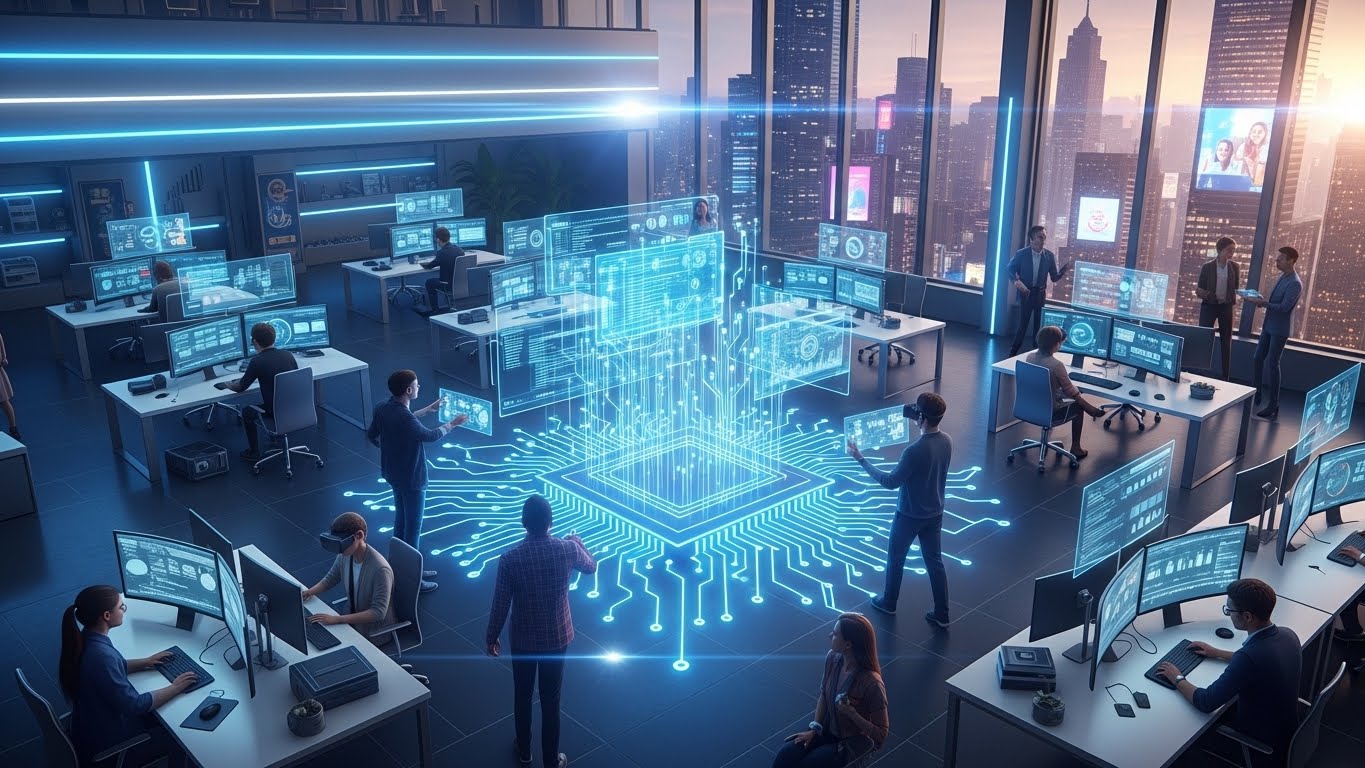

In an age where technology continues to evolve at lightning speed, our lives are becoming increasingly intertwined with digital advancements. From artificial intelligence to blockchain and quantum computing, the pace of change is transforming everything from how we communicate to how we work, play, and even think. These innovations aren’t just reshaping industries—they are redefining the very fabric of our daily existence. In this post, we’ll explore the technological frontiers that are paving the way for tomorrow’s world and how they will impact our future.
Artificial Intelligence: Transforming the Way We Live and Work
Artificial intelligence (AI) has arguably been the most impactful innovation of the past decade. Once confined to the realms of science fiction, AI is now embedded in our lives through personal assistants like Siri and Alexa, recommendation engines on streaming platforms, and even self-driving cars. At its core, AI is about enabling machines to learn, adapt, and make decisions, mimicking human intelligence in a way that was previously unimaginable.
In the workplace, AI is already having a profound impact. It’s being used to automate routine tasks, improving efficiency and freeing up human workers for more complex and creative tasks. In healthcare, AI is helping doctors diagnose diseases more accurately, while in finance, it’s being used to detect fraud and optimize trading strategies. However, as AI continues to evolve, concerns about privacy, ethics, and job displacement are rising. Balancing these concerns with the vast potential of AI will be a challenge we must address as this technology becomes more embedded in our society.
Blockchain: The Backbone of a Decentralized Future
Blockchain technology is one of the most revolutionary innovations to emerge in recent years. Originally developed as the underlying technology behind cryptocurrencies like Bitcoin and Ethereum, blockchain’s potential extends far beyond digital currencies. At its core, blockchain is a decentralized, distributed ledger that allows for secure, transparent transactions without the need for intermediaries. This makes it an ideal solution for industries like finance, healthcare, supply chain management, and more.
For example, in the financial sector, blockchain can streamline cross-border payments, making them faster and more secure. In healthcare, it can be used to ensure the privacy and integrity of patient data, allowing for better management and sharing of medical records. Even in supply chains, blockchain offers a transparent and tamper-proof way to track products from origin to delivery. As blockchain continues to mature, it’s poised to disrupt a wide range of industries by eliminating the need for trusted third parties, reducing fraud, and increasing transparency.
Quantum Computing: Unlocking a New Era of Possibilities
While quantum computing is still in its infancy, its potential to solve complex problems that classical computers cannot is immense. Traditional computers rely on binary code (ones and zeros) to process information, while quantum computers harness the power of quantum bits (qubits) that can exist in multiple states simultaneously. This allows quantum computers to perform calculations exponentially faster than even the most powerful supercomputers available today.
In the future, quantum computing could revolutionize fields like drug discovery, climate modeling, and cryptography. For instance, in drug development, quantum computers could simulate the behavior of molecules with unparalleled accuracy, potentially speeding up the discovery of new treatments. In cryptography, quantum computing could render current encryption methods obsolete, leading to the need for entirely new security protocols. Although quantum computers are not yet ready for widespread use, they represent a frontier that promises to redefine problem-solving on a scale never before seen.
The Rise of 5G: Connectivity That Will Power the Future
The advent of 5G technology promises to usher in a new era of connectivity, providing faster speeds, lower latency, and greater capacity than ever before. While 4G allowed us to stream videos and browse the internet on the go, 5G will take things to the next level, enabling real-time communication between billions of connected devices. This leap in connectivity will have a profound impact on industries ranging from healthcare to transportation and beyond.
In healthcare, 5G will enable telemedicine to thrive, allowing doctors to remotely monitor patients in real-time and even perform surgeries with robotic precision. In transportation, 5G will power autonomous vehicles, ensuring they can communicate with each other and their surroundings to navigate safely and efficiently. With the rise of the Internet of Things (IoT), 5G will also enable smart cities, where everything from traffic lights to waste management systems can be monitored and optimized in real-time.
However, the rollout of 5G also brings challenges, particularly around infrastructure and security. As the number of connected devices increases, so too does the need to secure these networks against cyber threats. Despite these hurdles, the potential of 5G to revolutionize industries and create entirely new ones is undeniable.
Automation: The Changing Face of Work
Automation is another transformative technology that is reshaping industries and labor markets worldwide. From self-checkout kiosks in retail stores to AI-powered robots in warehouses, automation is reducing the need for human intervention in many routine tasks. While this has led to increased efficiency and cost savings for businesses, it has also raised concerns about job displacement.
In the workplace, automation is not just limited to manual tasks. AI-driven software is now handling everything from customer service inquiries to data analysis, freeing up employees to focus on more complex and creative tasks. In manufacturing, robots are now capable of performing delicate tasks, such as assembling intricate components or testing products for defects. While automation is driving innovation and efficiency, it is also prompting the need for reskilling and upskilling the workforce to prepare for a future where human roles may shift.
Sustainability and Tech: Innovating for a Greener Tomorrow
In the face of climate change and environmental degradation, technology is playing a crucial role in driving sustainability. Clean energy solutions like solar, wind, and geothermal are becoming more efficient and affordable, while advances in battery storage technology are making renewable energy sources more reliable. Electric vehicles (EVs) are now becoming mainstream, with companies like Tesla pushing the boundaries of what’s possible in terms of range, charging speed, and affordability.
In agriculture, technologies like precision farming, AI, and drones are helping optimize resource use, reduce waste, and improve crop yields. Even the tech industry itself is becoming more environmentally conscious, with major companies committing to carbon neutrality and sustainable manufacturing practices. These innovations are helping create a future where technology not only enhances our lives but also contributes to a healthier planet.
The Future of Tech: A World of Endless Possibilities
The technological advancements we’re witnessing today are just the beginning. From AI and quantum computing to blockchain and 5G, the potential for innovation is limitless. As these technologies continue to mature and converge, they will create new opportunities, disrupt industries, and solve some of the world’s most pressing challenges.
However, with great power comes great responsibility. The rise of new technologies brings with it ethical considerations, regulatory challenges, and the need for thoughtful, human-centered design. As we navigate this new era, it’s essential that we approach technological advancement with a focus on inclusivity, sustainability, and equity to ensure that the benefits of innovation are felt by all.
In the end, the tech frontier is one of endless possibilities, and how we harness these innovations will define the world of tomorrow. The future is being built today, and we are all a part of that journey.