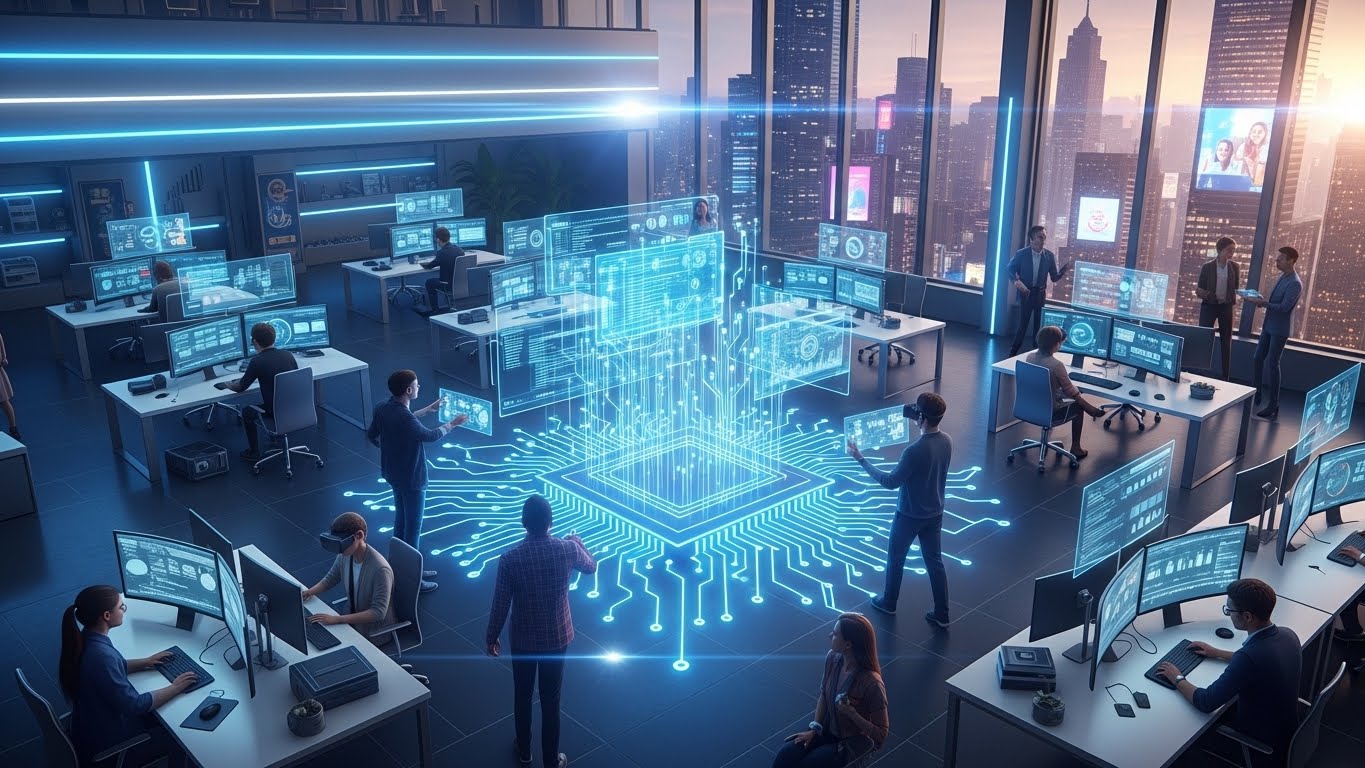


Technology has always been an integral part of human progress. From the invention of the wheel to the creation of artificial intelligence, technological advancements have shaped the course of history. As we step into the 21st century, the pace of innovation is accelerating, leading us to a future that is both exciting and uncertain. The question on everyone’s mind is: what will the future of technology look like? Will it make our lives easier, or will it introduce challenges that we are not yet prepared to face? In this blog post, we explore some of the key areas where technology is revolutionizing our world and what we can expect in the coming years.
The Rise of Artificial Intelligence and Machine Learning
One of the most significant developments in recent years has been the rise of artificial intelligence (AI) and machine learning (ML). These technologies have already begun to impact various industries, from healthcare to finance, and they are poised to play an even larger role in the future. AI has the potential to automate tasks that were once considered exclusively human, such as customer service, data analysis, and even creative endeavors like writing and art.
Machine learning, a subset of AI, allows computers to learn from data and improve their performance without explicit programming. This has led to breakthroughs in areas like natural language processing, which powers voice assistants such as Siri and Alexa, and image recognition, which is used in applications like facial recognition and autonomous vehicles. As AI and ML continue to evolve, we can expect them to become more integrated into our daily lives, transforming how we work, communicate, and interact with the world.
The Internet of Things (IoT) and Connected Devices
Another area where technology is making strides is in the realm of the Internet of Things (IoT). IoT refers to the network of physical devices, vehicles, home appliances, and other objects that are embedded with sensors and software, enabling them to connect and exchange data. The idea behind IoT is to create a more interconnected world where everything is linked, making life more convenient, efficient, and automated.
In the coming years, IoT will continue to expand, with more and more devices becoming connected. Smart homes are already a reality, with devices like thermostats, security cameras, and refrigerators being controlled remotely through smartphones and voice commands. As the IoT ecosystem grows, we can expect even more advanced applications, such as smart cities, where traffic lights, public transportation, and utilities are all managed through a centralized network of interconnected devices. This will lead to improved resource management, reduced energy consumption, and enhanced safety.
5G: The Next Generation of Connectivity
The rollout of 5G networks is another technological advancement that is expected to revolutionize the world. 5G, or fifth-generation wireless technology, promises faster internet speeds, lower latency, and the ability to connect more devices simultaneously. While 4G networks have already provided significant improvements in mobile connectivity, 5G will take things to the next level, enabling innovations like augmented reality (AR), virtual reality (VR), and autonomous vehicles.
With 5G, data transmission speeds will be up to 100 times faster than what we currently experience with 4G. This will open up new possibilities for industries such as healthcare, where telemedicine and remote surgeries will become more feasible due to the low latency and high bandwidth of 5G networks. Additionally, 5G will make it easier for IoT devices to communicate with one another, leading to a more seamless and interconnected digital ecosystem.
Blockchain and Cryptocurrency: Redefining Trust and Transactions
Blockchain technology, the underlying framework behind cryptocurrencies like Bitcoin and Ethereum, has gained considerable attention in recent years. Blockchain is a decentralized, distributed ledger that allows for secure and transparent transactions without the need for intermediaries like banks. This technology has the potential to disrupt industries beyond finance, including supply chain management, healthcare, and voting systems.
Blockchain provides an immutable record of transactions, which makes it ideal for applications where trust and transparency are crucial. For instance, in the supply chain, blockchain can be used to track the movement of goods from production to delivery, ensuring that products are authentic and have not been tampered with. In the healthcare industry, blockchain can be used to securely store patient records, giving individuals greater control over their health data while ensuring privacy and security.
Cryptocurrencies, built on blockchain technology, have also become a topic of significant interest. While they have faced volatility and regulatory challenges, cryptocurrencies have the potential to reshape the way we think about money and financial transactions. As blockchain technology continues to mature, we may see more widespread adoption of both blockchain-based applications and digital currencies in everyday life.
The Role of Big Data and Analytics in Decision Making
In today’s digital world, data is being generated at an unprecedented rate. From social media posts to online purchases, every action we take online produces valuable data. Big data refers to large and complex data sets that are too difficult to process using traditional methods. This data can provide insights into customer behavior, market trends, and operational inefficiencies, enabling businesses and organizations to make more informed decisions.
With the help of advanced analytics and AI-powered tools, companies can now analyze vast amounts of data to uncover patterns, predict future trends, and optimize their operations. For example, in the retail industry, big data analytics can help companies personalize recommendations for customers based on their shopping history and preferences. In healthcare, data analytics can be used to identify potential outbreaks of diseases and optimize treatment plans for patients.
As big data continues to grow, its applications will expand, providing valuable insights for businesses, governments, and individuals alike. However, with the increasing reliance on data comes concerns about privacy and security. As we collect more data, it is essential to ensure that proper safeguards are in place to protect personal information and prevent misuse.
The Ethical Implications of Technological Advancements
While the future of technology holds immense promise, it also raises important ethical questions. As AI, machine learning, and automation continue to advance, there are concerns about job displacement and the potential for widening economic inequality. Automation could replace many manual and repetitive jobs, leaving workers without the skills needed for the new jobs of the future. To address these concerns, it will be essential to invest in education and retraining programs to help workers adapt to the changing job market.
Additionally, as technology becomes more integrated into our lives, issues like privacy, data security, and surveillance will become more pressing. Who owns the data that is collected by our devices? How can we ensure that our personal information is kept secure in a world where cyberattacks are becoming more sophisticated? These are questions that society will need to grapple with as we embrace new technologies.
Another ethical concern is the potential misuse of AI and autonomous systems. For example, AI-powered facial recognition technology has raised concerns about surveillance and the potential for invasion of privacy. Similarly, the use of AI in military applications, such as autonomous drones, raises questions about accountability and the potential for unintended consequences. It will be crucial to establish ethical guidelines and regulations to ensure that technology is used responsibly and for the benefit of society as a whole.
Conclusion: The Path Forward
The future of technology is both exciting and uncertain. From AI and IoT to blockchain and big data, technological advancements have the potential to transform every aspect of our lives. However, as we move forward, it will be important to address the ethical, social, and economic challenges that these innovations bring. By doing so, we can ensure that technology is used in ways that benefit everyone, creating a smarter, more connected world for future generations.
In the end, technology is only as good as the way we choose to use it. By harnessing its potential responsibly, we can create a future that is not only more efficient and convenient but also more inclusive, ethical, and sustainable.