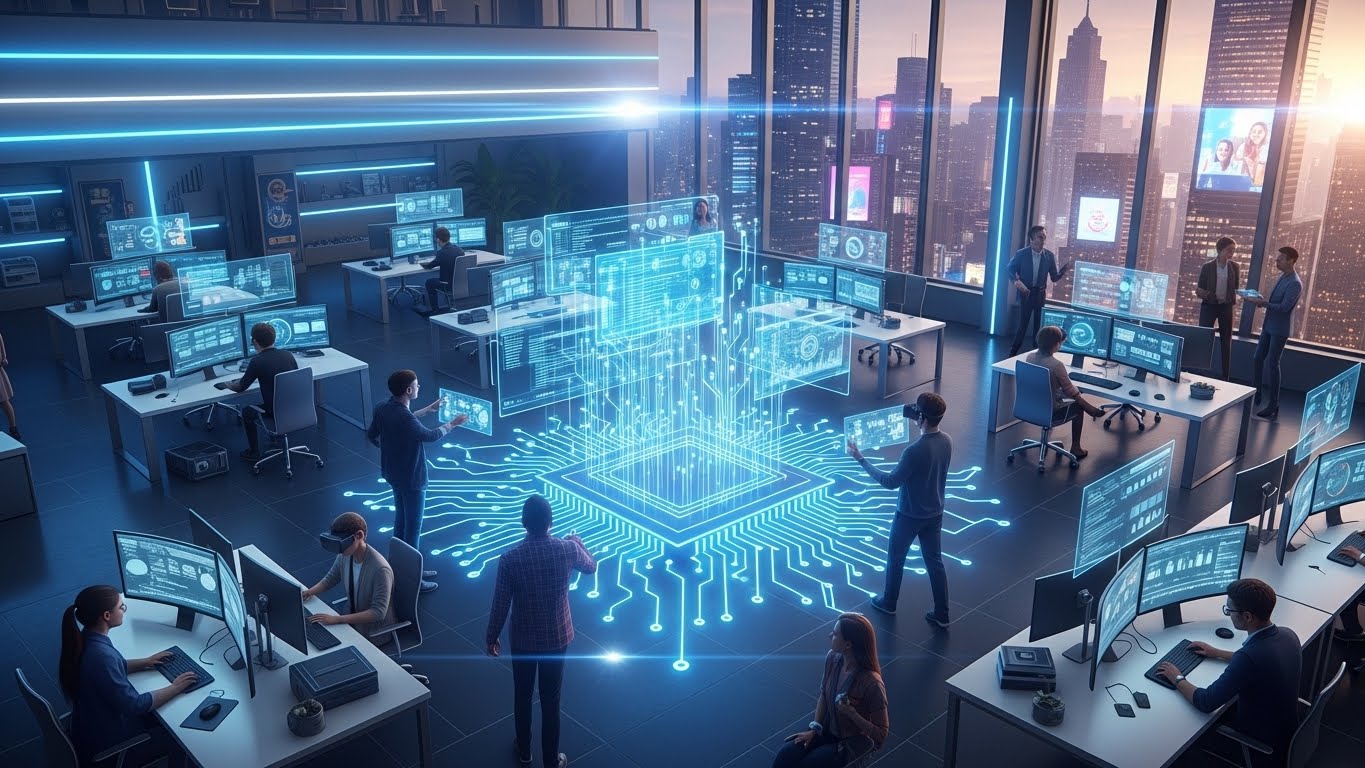


Technology is advancing at an unprecedented rate, transforming how we interact with the world. We are entering an era where smart systems, artificial intelligence, and connected devices are no longer the future—they are the present. From the workplace to our homes, technology is increasingly influencing every facet of daily life. In this blog post, we’ll explore how these innovations are shaping the future and what they mean for industries, society, and individuals.
The Power of Artificial Intelligence in Everyday Life
Artificial Intelligence, once a distant dream, has rapidly integrated itself into our daily routines. From virtual assistants like Siri and Alexa to self-driving cars, AI is making decisions for us, often behind the scenes. AI technologies, such as machine learning and natural language processing, are now improving decision-making, personalizing experiences, and automating tedious tasks.
AI’s potential goes far beyond personal assistants. In healthcare, AI is revolutionizing diagnostics, enabling faster and more accurate disease detection. It is also optimizing supply chains in industries like retail and logistics, where AI-driven algorithms predict demand and streamline inventory management. As AI continues to evolve, we will see even more powerful applications in areas like predictive healthcare, autonomous transportation, and even creative industries, where AI will assist in art, writing, and music creation.
The Rise of 5G and Its Impact on Connectivity
As we continue to depend on the internet for nearly every aspect of our lives, the need for faster and more reliable connections becomes increasingly urgent. 5G, the next generation of wireless technology, promises to deliver exactly that. Unlike its predecessors, 5G can offer download speeds up to 100 times faster, significantly lower latency, and the ability to support a far greater number of devices connected at once.
The impact of 5G will be felt across various industries. In healthcare, 5G can facilitate real-time remote surgeries, where doctors can perform operations via robotic arms controlled from thousands of miles away. In transportation, it will enhance the functionality of autonomous vehicles, allowing them to communicate more effectively with other vehicles and infrastructure. For businesses, 5G will enable faster data processing and enhanced cloud computing, empowering the digital transformation of industries worldwide.
The Growth of the Internet of Things (IoT)
The Internet of Things (IoT) is another rapidly growing technology that is changing the way we live. IoT refers to the network of devices, appliances, and sensors that communicate with each other over the internet. This includes everything from smart thermostats that adjust the temperature in our homes to fitness trackers that monitor our health metrics.
The potential of IoT is vast. In smart cities, IoT devices can collect data on everything from traffic patterns to air quality, allowing city planners to make more informed decisions. In agriculture, IoT sensors are used to monitor soil moisture levels and weather conditions, helping farmers optimize crop yields. The continued growth of IoT will drive the development of more interconnected, efficient, and sustainable systems across various sectors.
Blockchain Technology Beyond Cryptocurrency
Blockchain technology, which powers cryptocurrencies like Bitcoin and Ethereum, is gaining traction for its potential to revolutionize industries far beyond finance. Blockchain offers a decentralized, transparent, and secure way to record transactions, making it ideal for applications that require verified and immutable data.
In supply chain management, blockchain allows companies to trace products from raw material to final sale, ensuring transparency and reducing fraud. In healthcare, it can securely store and share patient data, ensuring confidentiality and improving patient care. Even voting systems could be made more secure and transparent by utilizing blockchain technology, helping to eliminate fraud and increase public trust in elections.
Robotics: Changing the Way We Work and Live
Robots have traditionally been associated with factories and assembly lines, but recent advancements have allowed them to venture into other fields, including healthcare, hospitality, and even the home. Modern robots are now capable of performing tasks that require a high level of precision and adaptability, such as robotic surgeries or providing assistance in elderly care.
In the workplace, robots and automation are transforming industries by increasing efficiency and reducing costs. In agriculture, robots are used to plant, monitor, and harvest crops, while in manufacturing, automated systems handle repetitive tasks. As robots become more advanced, their ability to work alongside humans will grow, opening up new possibilities for collaboration between humans and machines.
The Ethical Challenges of Emerging Technologies
While the potential of new technologies is exciting, it’s important to consider the ethical challenges they bring. For example, AI systems can sometimes exhibit biases based on the data they are trained on, leading to unfair outcomes. As AI becomes more integrated into critical areas like hiring, criminal justice, and healthcare, ensuring fairness and accountability will be essential.
The rise of automation also raises concerns about job displacement. As robots and AI systems take over tasks traditionally performed by humans, there is a risk of large-scale unemployment in certain sectors. Governments and businesses will need to work together to provide retraining opportunities and create new roles that emerge as a result of these technological changes.
Embracing the Future of Technology
The future of technology is both exciting and challenging. As we continue to see breakthroughs in AI, 5G, IoT, blockchain, and robotics, our lives will be increasingly shaped by these innovations. From improving healthcare outcomes to enhancing the efficiency of industries and enabling new ways of connecting with one another, technology holds the potential to improve lives on a global scale.
However, as we move forward, we must approach these advancements with a sense of responsibility. It’s important to consider the ethical implications of emerging technologies and ensure that they are used in ways that benefit society as a whole. By embracing these innovations with foresight and care, we can ensure that technology will continue to be a force for good in shaping the future.